The Purpose of Property Assessments [Video]
Matt Chan • January 13, 2016

Have you ever wondered why we pay property taxes or how “they” decide who pays what? This video by BC Assessment explains the purpose of property taxes, and how they benefit everyone! Enjoy!

Transcript:

This is Milltown a typical town with typical townsfolk. But when it rains the whole town from the mayor do with mouse have the same messy problem, mud. Mill towns mud is affecting everyone. the shopkeeper can’t keep his shot clean, the widow Swenson can’t safely walk down the street. The only way to get to your wagon is to trudge through the mud and a mayor with muddy shoes,well, that just isn’t mayorly. What Milltown needs, is a brand new boardwalk along Main Street, but who will pay for the new boardwalk?

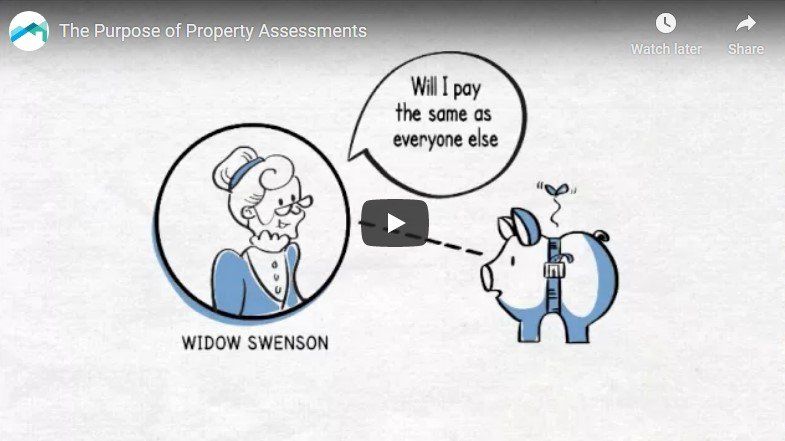
Everyone gathered at a town meeting to figure out what to do. Some folks said the shops along Main Street should pay for the boardwalk, because they would benefit the most. Others thought that because the rich folks had more money they could afford to pay more. The farmers felt that they would have to raise their prices if they had to pay for the boardwalk, and the business owners at the wagon shop and the sawmill thought that they would have to raise prices too.The widow Swenson said she was on a fixed income and wondered if she had to pay the same as everyone else. The railway owner, didn’t show up at all, so some folks thought he should pay for everything.

What they did agree on, was that as a community everyone had a collective interest in the good of the town and the one thing they had in common was that they all owned property in Milltown. So it was decided that each property would be taxed and a portion of the money collected would be used to pay for the new boardwalk. What seems fair to everyone was to tax each property based on its value and how it was being used.

So the owners of the wagon shop, the sawmill, and the shops along Main Street would have to pay more taxes because of how their properties were being used. And based on the value of their property the folks who lived in bigger houses and in better neighbourhoods would end up paying more tax than the average homeowner. It was decided that farmers would get a break because higher taxes would mean the price of food would increase, and this would affect everyone in Milltown. Everyone agreed it didn’t make sense to tax properties like schools and churches because they were already publicly funded and provided services available to everyone. And even though the widow Swenson lived on Main Street and her property could be developed in the future, it was agreed that she would pay less tax because she had lived on the property for many years.

In 1974 the Assessment Act and BC assessment performed from principles just like these. BC Assessment was created to provide assessment which are relied upon to build sustainable communities throughout BC. The good people at BC Assessment determine the value of your property, send out a notice once a year, and then ask you to decide if the value is accurate. To keep things fair you have the option to check and compare the values of other property assessments online.

Thanks to the funding generated from your property taxes improvements like a new boardwalk and services like police, fire, schools and hospitals are made possible in your community from Milltown to your town.

CONTACT

Share

RECENT POSTS

By Matthew Chan September 2, 2026
The Bank of Canada announced today that it is holding its target for the overnight rate at 2.25%, with the Bank Rate at 2.5% and the deposit rate at 2.20%. While Canada's economic recovery is broadening, a new layer of uncertainty has entered the picture. Here is what happened and what it means for your mortgage.
By Matthew Chan August 26, 2026
Mortgage Options During Divorce or Separation: What You Should Know If you’re going through—or considering—a divorce or separation, you may not realize that there are mortgage solutions specifically designed to help one party keep the home . For many people, the family home is their largest asset and where most of their equity is tied up. In situations like this, a spousal buyout program can allow one person to refinance the property and buy out the other party’s share—often up to 95% of the home’s value . This option can work whether you want to keep the home or your former partner does. What Is the Spousal Buyout Program? The spousal buyout program is a refinancing option that allows one owner to purchase the other owner’s share of the property as part of a separation or divorce settlement. In some cases, it can also be used to pay off jointly held debts, as outlined in a legal agreement. Below are some of the most common questions about how the program works. Is a finalized separation agreement required? Yes. Lenders require a signed and finalized separation agreement that clearly outlines how assets and debts are to be divided. This document is essential for approval. Can the funds be used for renovations or personal debts? No. Funds from a spousal buyout can only be used to: Buy out the other owner’s share of equity Pay off joint debts specifically listed in the separation agreement They cannot be used for renovations, personal loans, or unrelated expenses. How much equity can be accessed? The maximum amount available is the amount required to: Buy out the other party’s agreed-upon share of equity Pay off any joint debts listed in the agreement This amount cannot exceed 95% loan-to-value . What is the maximum loan-to-value allowed? The maximum loan-to-value is the lesser of : 95%, or The remaining mortgage balance plus the required buyout and joint debt payout The property must be the primary owner-occupied residence . Do all parties need to be on title? Yes. All individuals involved in the buyout must currently be registered on title. Your solicitor will confirm this through a title search. Does this only apply to married or common-law couples? No. While commonly used for married or common-law couples, the program may also apply to siblings or friends who jointly own a property and need one party to exit the mortgage. These cases are typically reviewed on an exception basis and require insurer approval. If no separation agreement exists, the purchase contract must clearly outline the buyout terms. Is a full appraisal required? Yes. A physical, on-site appraisal is required to confirm the property’s value before the mortgage can be finalized. Final Thoughts This overview covers some of the most common questions about mortgage options during separation or divorce, but every situation is different. Working with an independent mortgage professional gives you access to multiple lenders, specialized programs, and unbiased advice—so you can clearly understand your options and choose what’s best for your future. If you’re navigating a separation and need guidance around keeping or selling the home, feel free to connect anytime. All conversations are handled with discretion and confidentiality, and I’d be happy to walk you through your options.
By Matthew Chan August 19, 2026
Why More Mortgage Options Matter—Especially for Assignment Purchases One of the biggest advantages of working with an independent mortgage professional is access to choice. Instead of being limited to one lender and one set of products, mortgage brokers work with multiple lenders—each with different guidelines, risk tolerances, and mortgage solutions. That flexibility becomes especially valuable when your situation doesn’t fit neatly into a “standard” box. A great example of this is purchasing new construction through an assignment contract . Why Assignment Purchases Can Be Challenging Assignment purchases are often viewed as higher risk by traditional lenders. Rather than declining these deals outright, many lenders quietly make them difficult by adding layers of conditions, restrictions, or uncertainty. This can lead to delays, frustration, or financing falling apart late in the process. The Good News There are lenders—available exclusively through the broker channel —that have clear, favourable policies for assignment purchases. With the right lender and proper planning, these transactions are absolutely doable. Typical Financing Requirements for Assignment Purchases While every situation is unique, many lenders that allow assignment financing look for the following: Standard purchase qualification, including income verification, credit, and down payment Assignments accepted at either the original purchase price or current market value Minimum 620 credit score , with no prior bankruptcies or consumer proposals The full down payment must come from the purchaser —seller incentives cannot be used Required Documentation To secure financing, lenders typically require: The original purchase agreement signed by all parties The MLS listing (if applicable) The assignment agreement signed by the builder, original purchaser, and new buyer Any side agreements outlining changes to the purchase price A full appraisal to confirm value This list isn’t exhaustive, but it highlights that while assignment purchases require more coordination, they are very achievable with the right lender and guidance. Final Thoughts Assignment contracts can open doors to great opportunities—but only if your financing supports the transaction. This is where access to multiple lenders and specialized policies makes a real difference. If you’re considering purchasing new construction through an assignment, or if you’d like to explore more traditional purchase options, feel free to connect anytime. I’d be happy to walk you through the mortgage products available and help you choose an option that doesn’t limit your financing possibilities.